Why is it important to keep a headache calendar or headache diary?
Migraine
Tension headache
Medically reviewed article
Why is it important to keep a headache calendar or headache diary?
If you dream of taking control of your headaches and gaining a better understanding of your symptoms, a headache diary may be the tool you have been looking for.
By
Hemi Health
Hemi Health
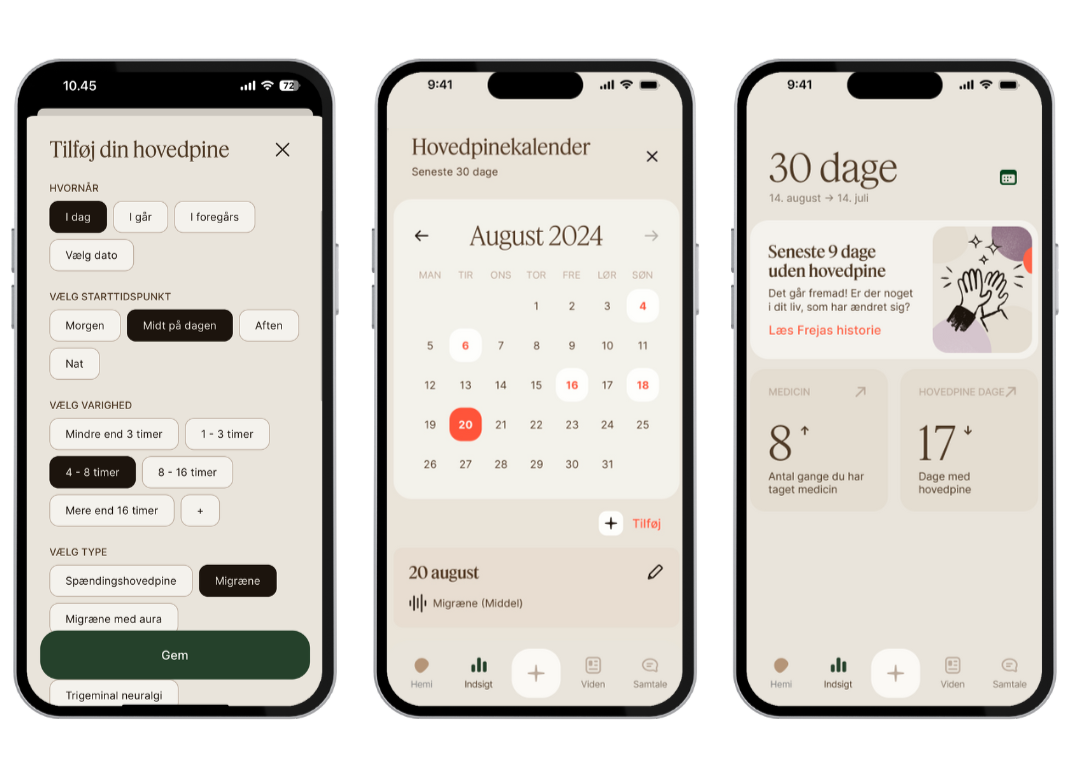
A headache calendar is a calendar overview of the type of headache you have had on a specific day, your pain intensity, and whether you have taken medication. A headache diary is more detailed. A headache diary is a tool for noting the date, symptoms, pain intensity, associated symptoms, medication, circumstances, and other factors related to your headache.
Gain an overview and better treatment with a headache calendar or diary
A headache calendar or diary are thus important tools used to provide an overview and insight into your headache disorder. They help both you and your healthcare provider, so the right treatment can be initiated and continuously evaluated.
A headache calendar does not require much information to be useful for your treatment. If you have noted the type of headache you have had, the pain intensity, and which and how much acute medication you may have taken, it is actually enough to give your healthcare provider a good overview and the opportunity to evaluate your treatment.
For those with a headache disorder, keeping a calendar or diary can help provide a sense of greater control. It provides a good overview of both good and less good periods and whether your use of painkillers is changing. When you keep track of how often you take painkillers, you can help yourself prevent medication-overuse headache (MOH).
How do you keep a headache calendar correctly?
Note daily: Before you go to bed, note whether you have had a migraine or headache.
Indicate pain intensity: Describe what the pain intensity has been like during the day.
Log your medication use: Note when you take painkillers, even for other types of pain like backaches or toothaches.
Unsure about your headache diagnosis?
Whether you visit your own GP or are referred to a headache clinic, your headache diagnosis will be based on the symptoms you describe. Migraine, tension-type headache and other primary headache disorders cannot be detected through a scan, blood test, or similar. Therefore, your healthcare provider relies on you being thorough in your description of your symptoms.
This is where a headache diary can be particularly helpful. Experience shows that very few people can provide a detailed description of their symptoms, how many days they have attacks, and how much acute medication they have taken if they haven't written it down.
A diagnostic headache diary is useful in cases where your doctor or healthcare provider is uncertain about your headache diagnosis. It is typically filled out over a month and is more detailed than a calendar. It consists of 13 questions covering your headache symptoms before and during an attack, as well as the duration and any medication you may have taken.
Two pieces of advice:
If you are already receiving treatment, it is always a good idea to talk to your healthcare provider about what they need in order to make a diagnosis.
If you are a patient at Hemi, you can use our digital headache diary
Hemi's digital headache diary is simple to fill out and continuously tracks headache and migraine days as well as your use of painkillers, helping you maintain a clear overview.
We have chosen to call it a diary, as you can personalize it and add the details you find important. We know that many people are interested in being able to identify patterns in their attacks and potential triggers. This could, for example, be whether attacks typically occur around your period, in connection with specific events, changes in your sleep patterns, or similar factors.
The most important thing to remember
A headache calendar or diary is more than just a simple tool – it is a vital part of your long-term treatment. By consistently recording your symptoms, medication use, and other relevant factors, you and your healthcare provider can gain insights that may improve your treatment over time.
Remember that the goal is to create an overview that can help you gain better control over your headaches and ensure more targeted and effective long-term treatment.
“Hemi is a private specialist clinic featuring some of the country's leading experts in headaches and related conditions. We offer thorough assessment and targeted treatment for both children and adults.”
Anna Løfqvist
Head of Brand & Communication
See other related articles
Here you can find knowledge from our specialists, new research, and personal stories from people with lived experience.